Exciting news from the research of the CRM-geothermal project!
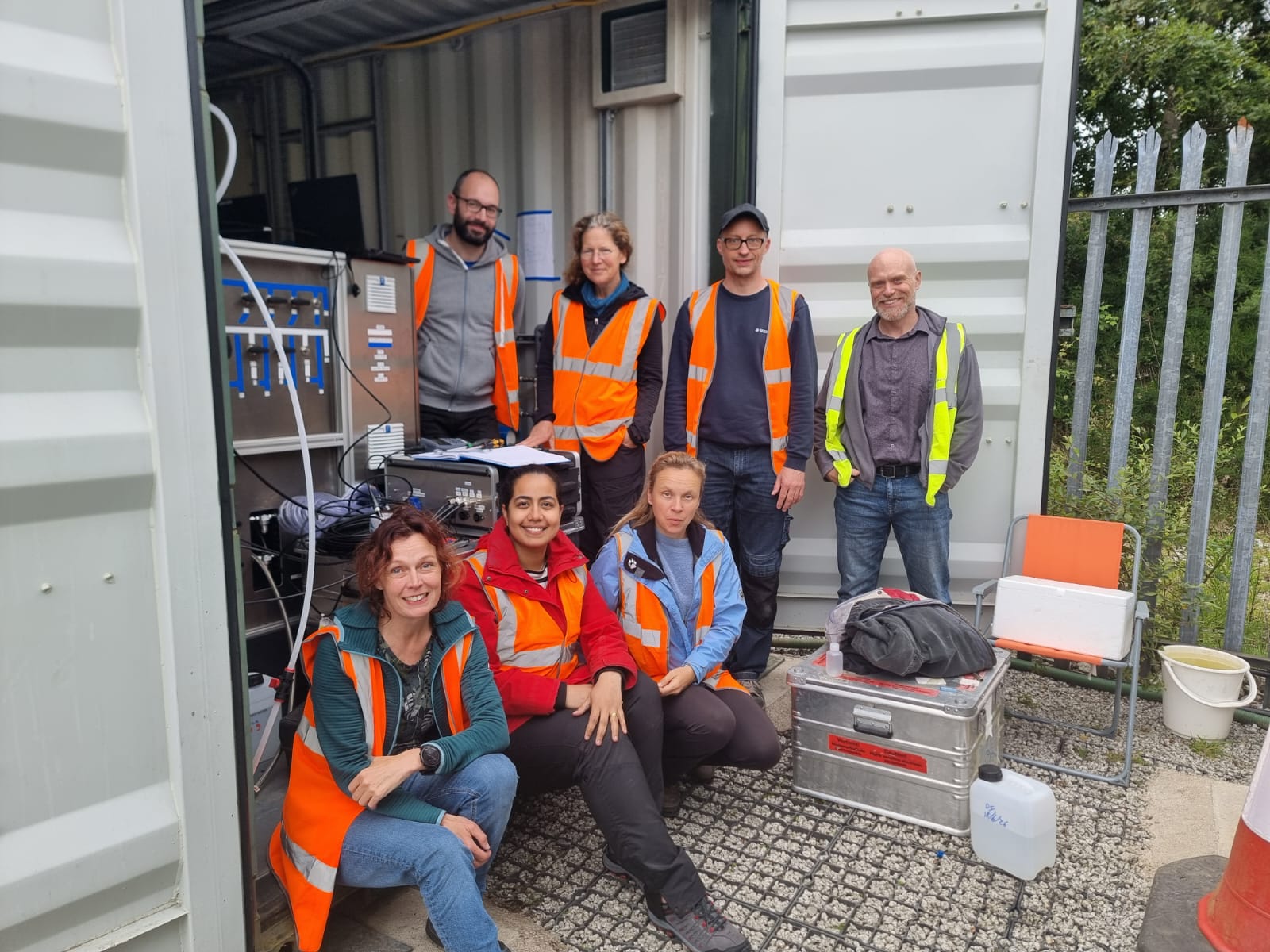
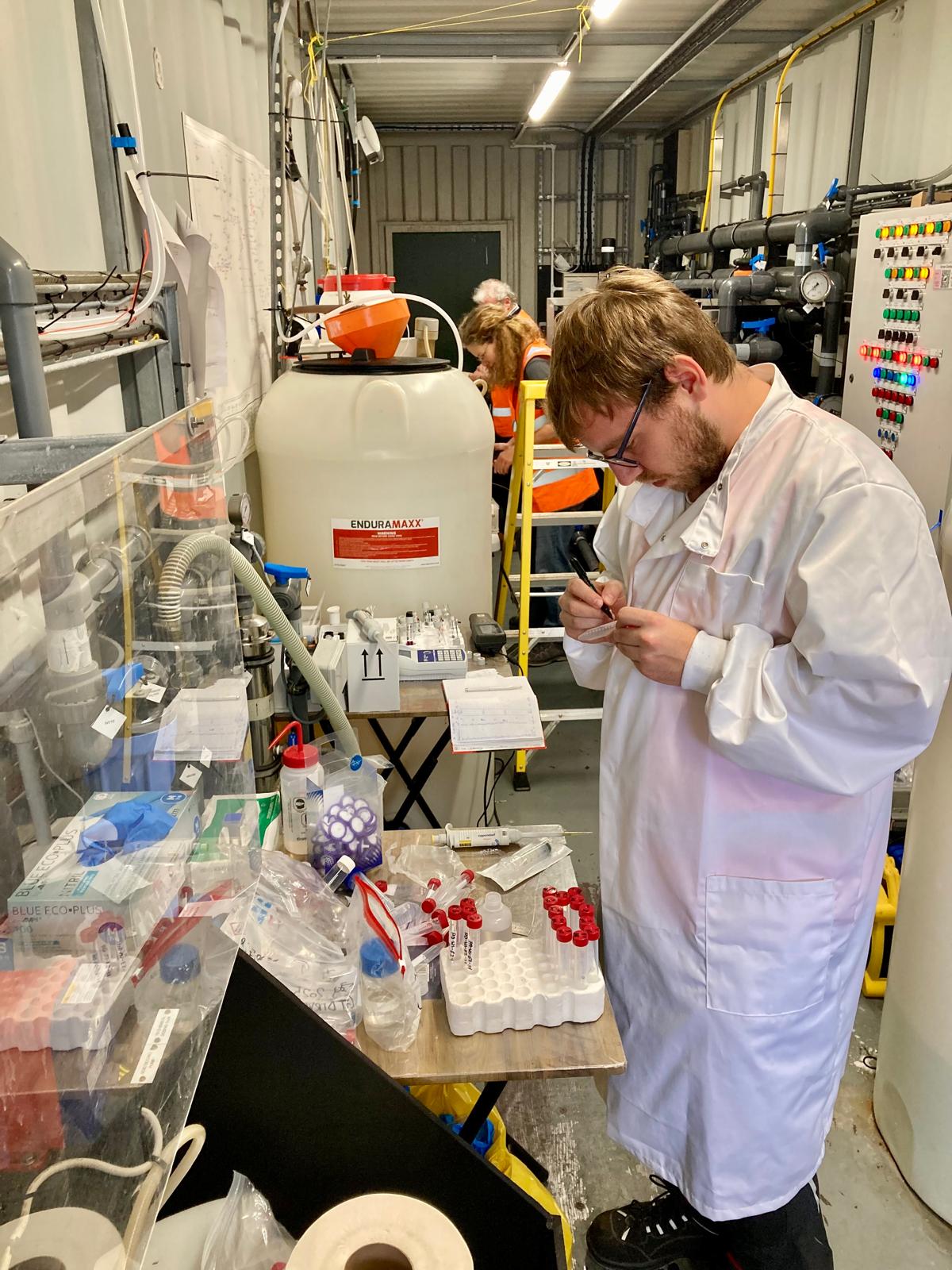
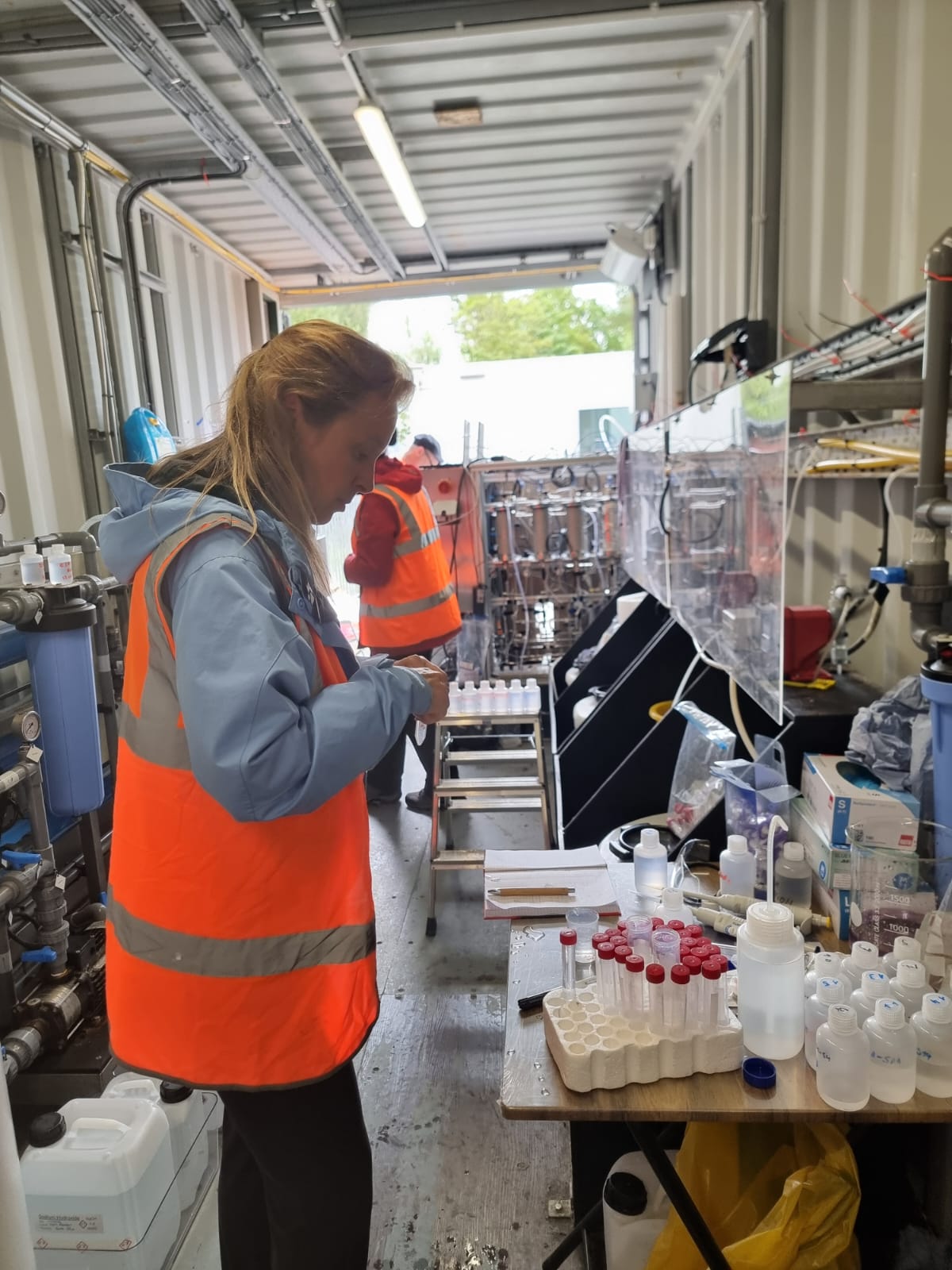
From 15 to 25 June 2026, a group of researchers and technicians from GFZ German Research Centre for Geosciences worked in Cornwall together with partners from Cornish Lithium to demonstrate extraction of lithium and helium by two methods developed within the CRM geothermal project.
At the Cornish Lithium site in United Downs, a geothermal well was drilled into granitic rocks. Here, lithium- and helium-rich brine can be pumped from the well to test the extraction technologies under flowing conditions.
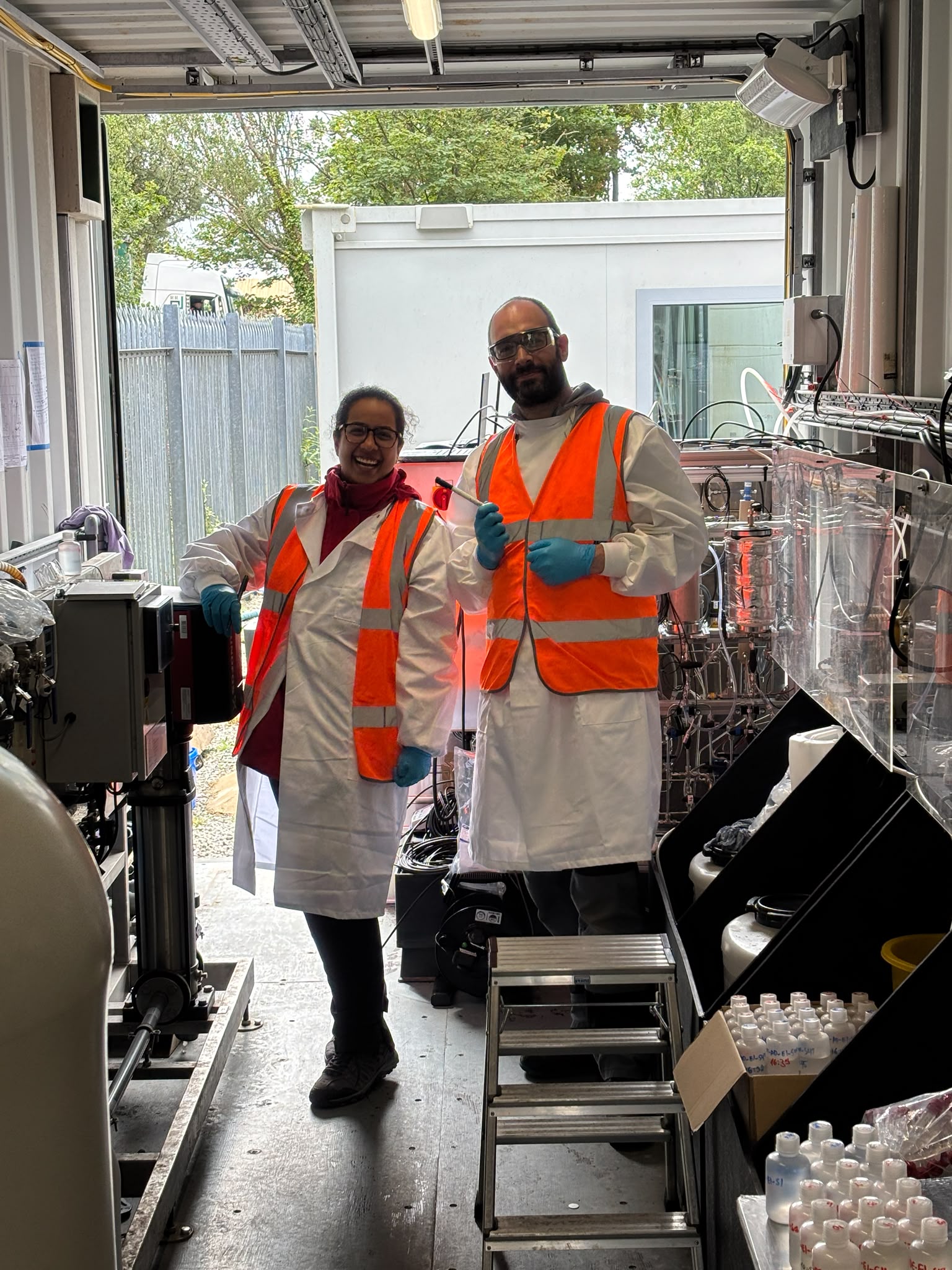
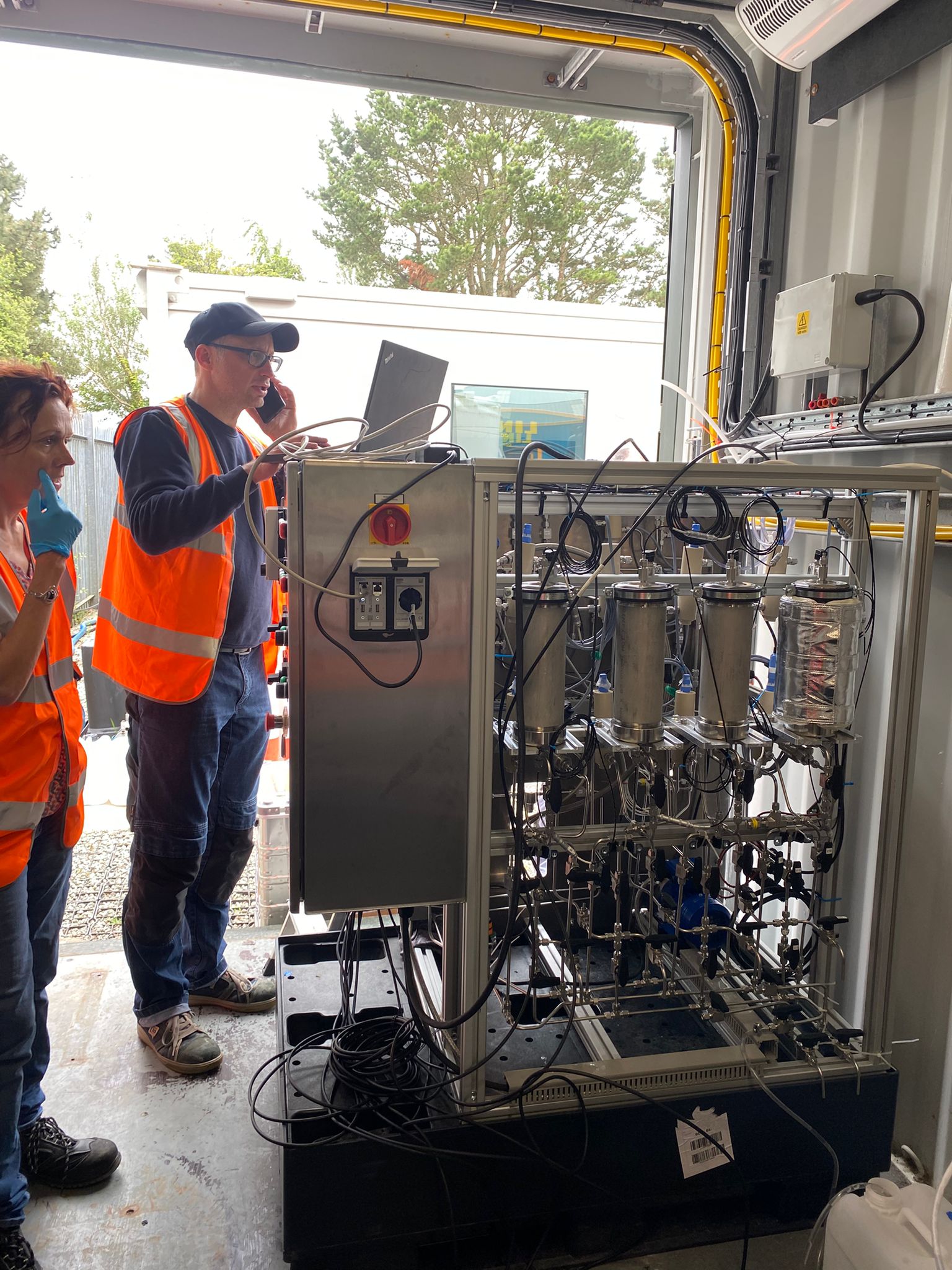
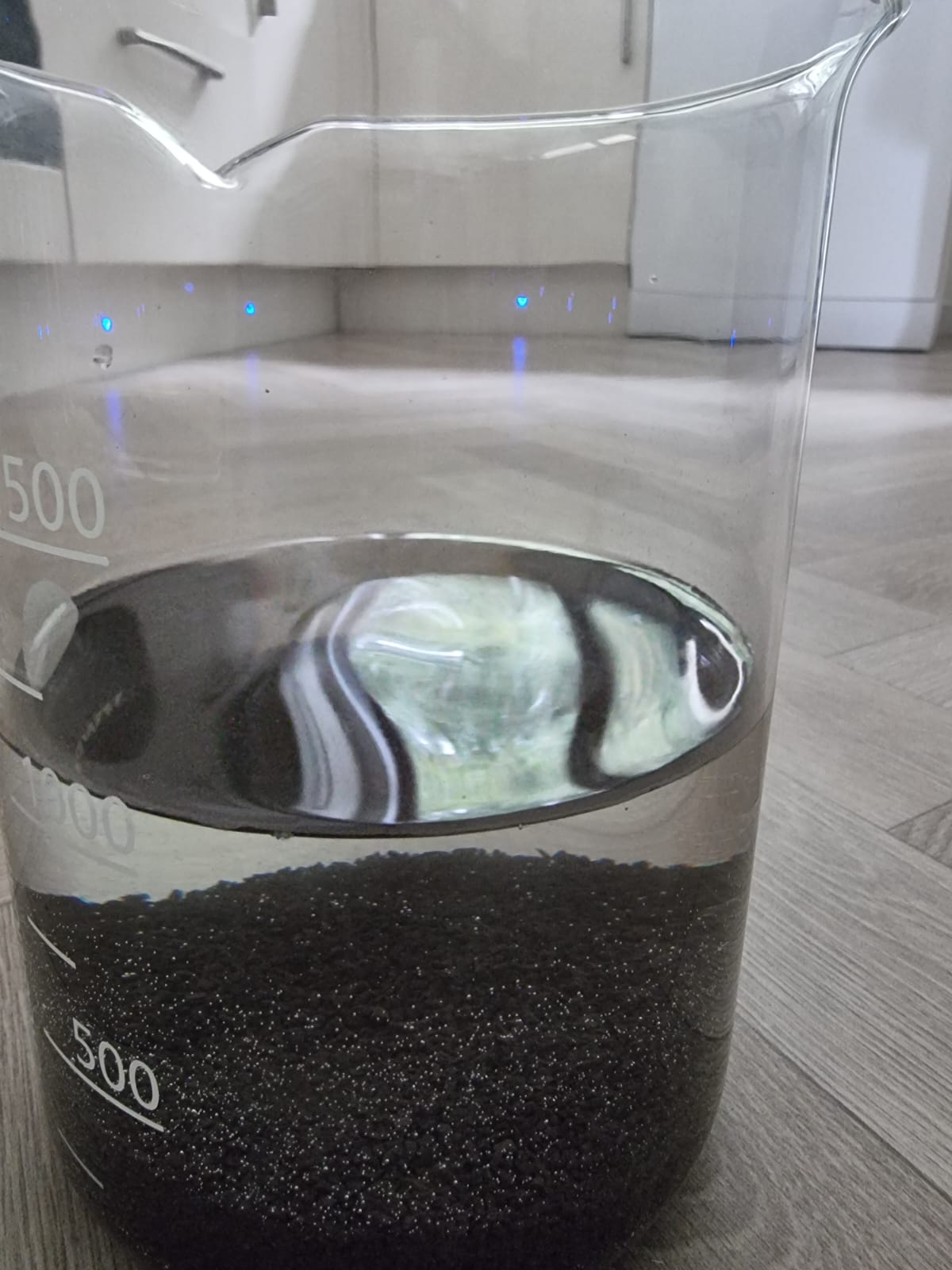
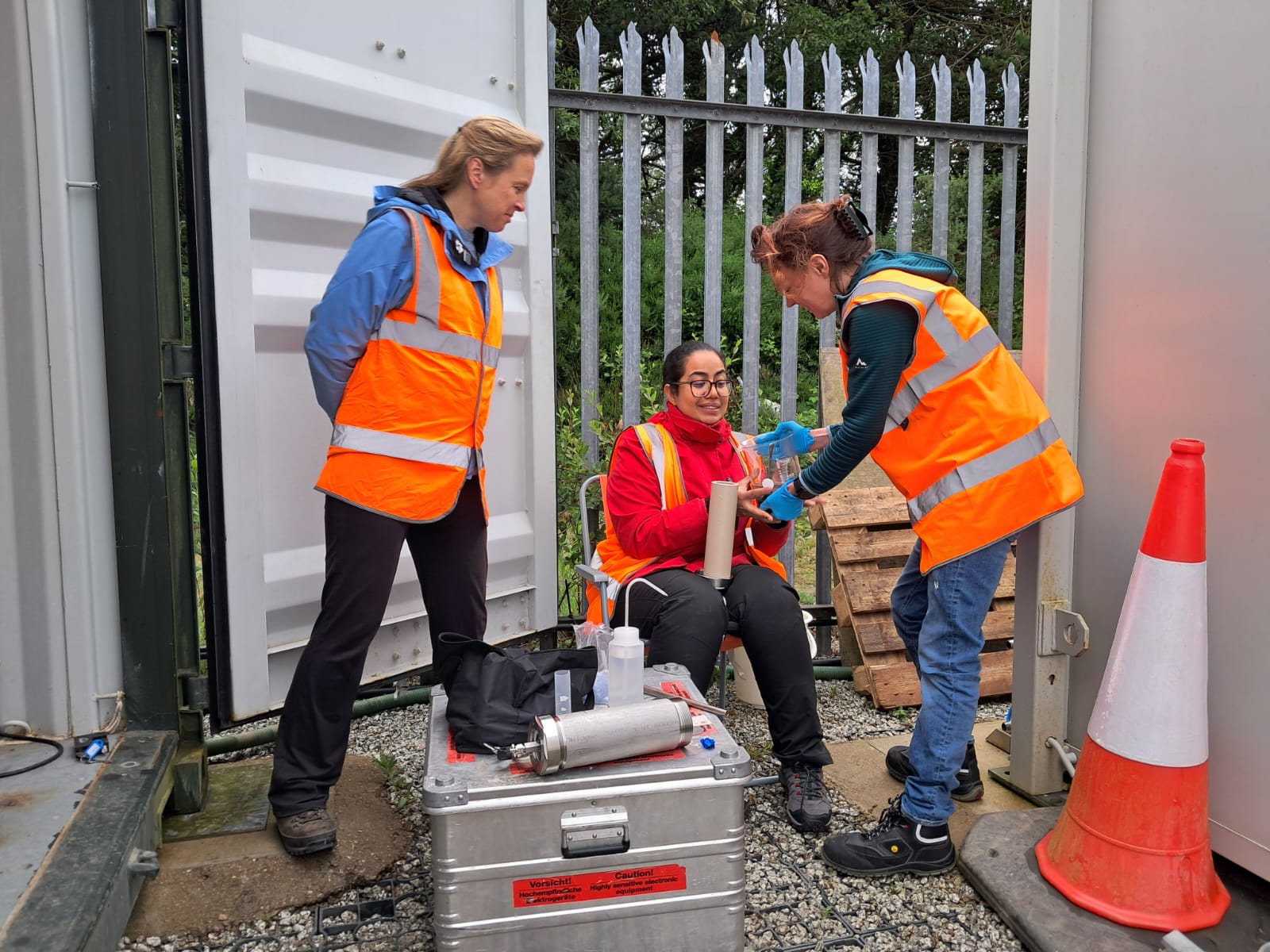
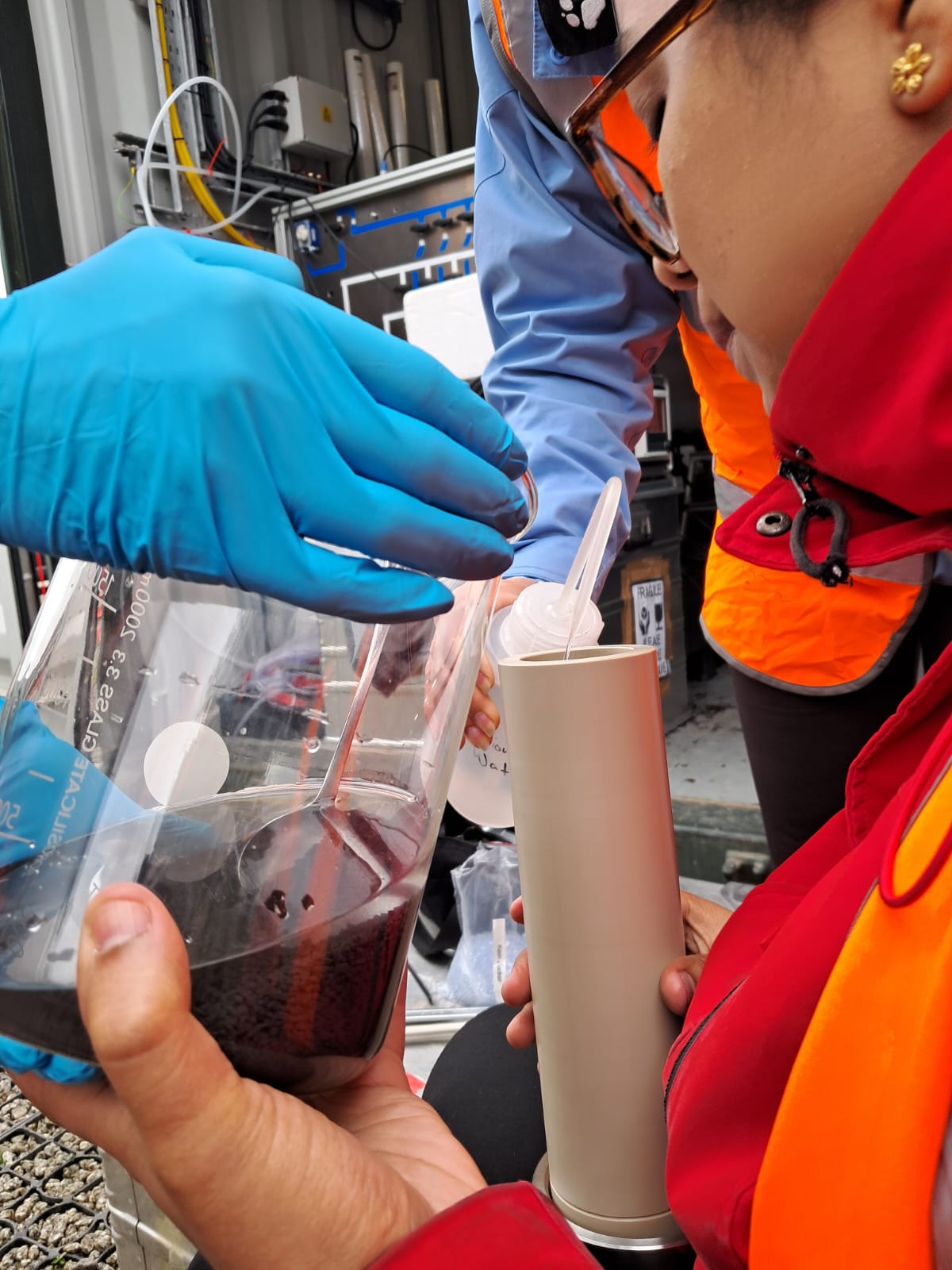
For lithium extraction, the goal of the experiment was to test different parameters such as flow and temperature to observe how the adsorbent material would perform. The tested method was developed by Jörg Zotzmann within WP3 and is based on adsorption of lithium on manganese oxides bound to chitosan. A Fluid Metal Extraction (FluMex) miniplant was built at GFZ and transported to the UK to perform in-situ experiments. Stefan Kranz (engineer of the FluMex-Miniplant and task leader), Karen Silgado (PhD student in the project), and Simona Regenspurg (project coordinator and geochemist) were on-site, supported on-site by the technicians Florian Jasper Lüdicke, Robby Hoffmann, and Lukas Knüttel and remotely by Robert Peksa.
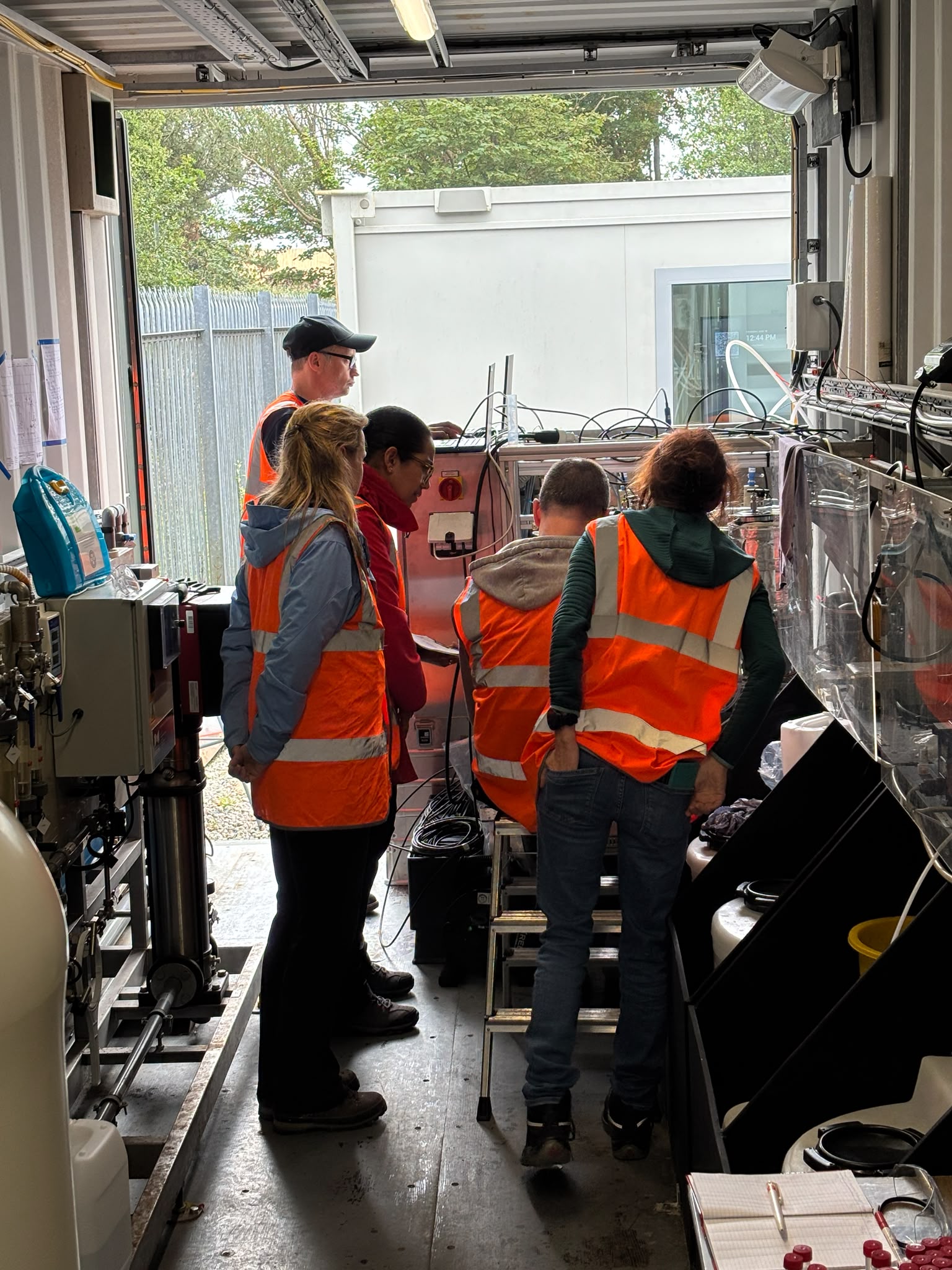
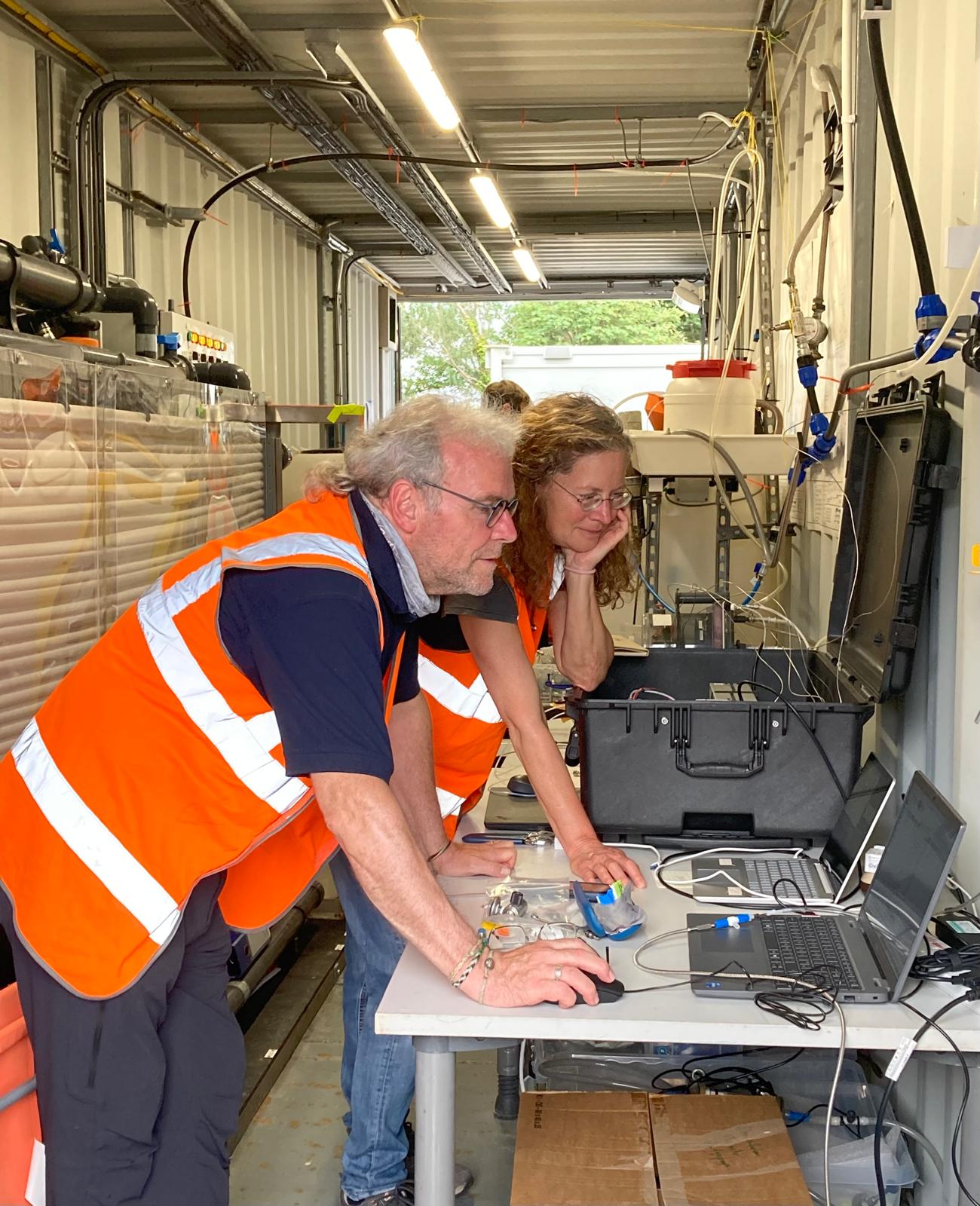
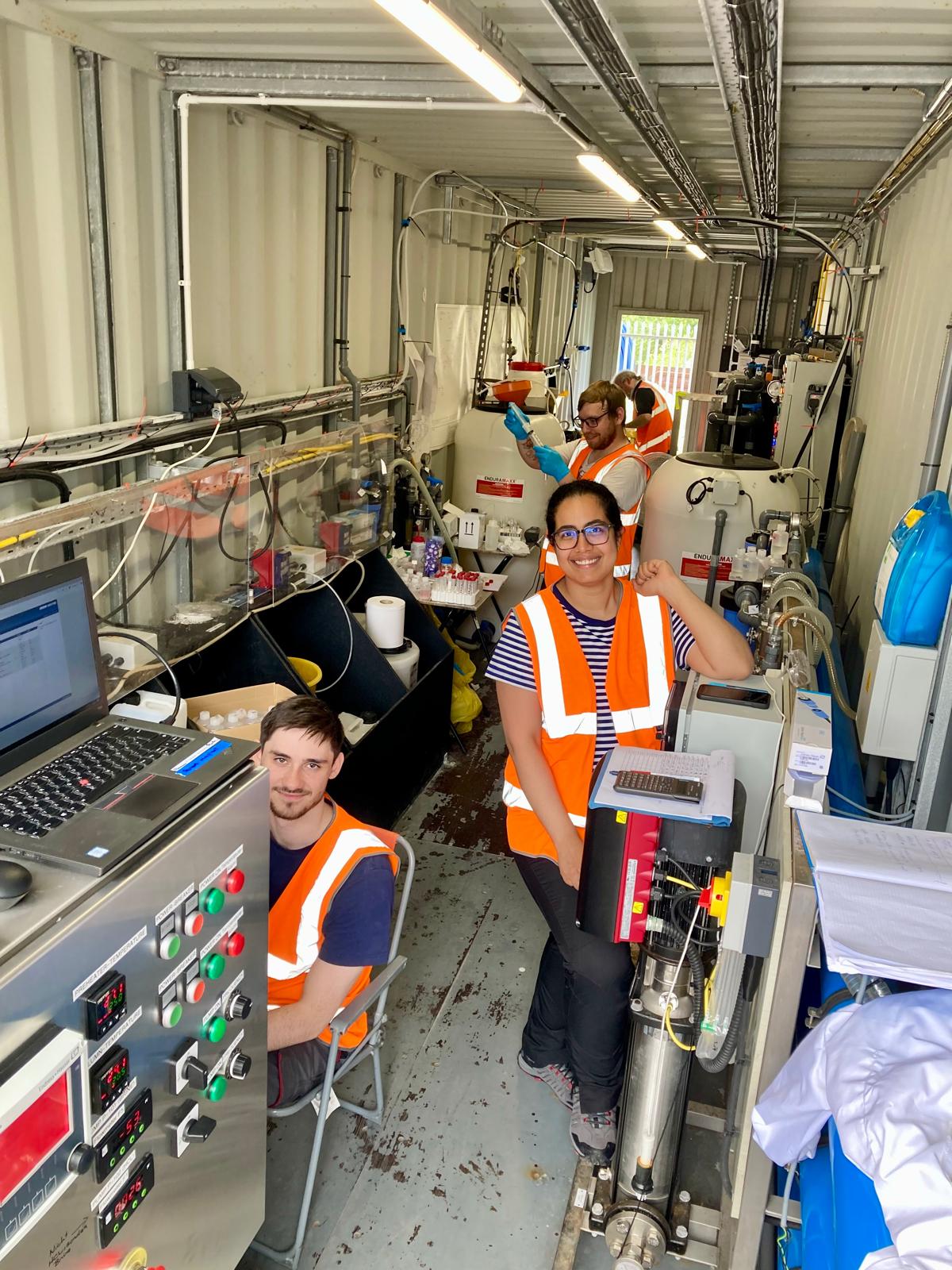
During the first two days in Cornwall, the FluMex miniplant was set up. The device allows to measure various parameters before and after the adsorption column and to vary the experimental conditions. During the following days, adsorption, desorption, and regeneration tests were performed.
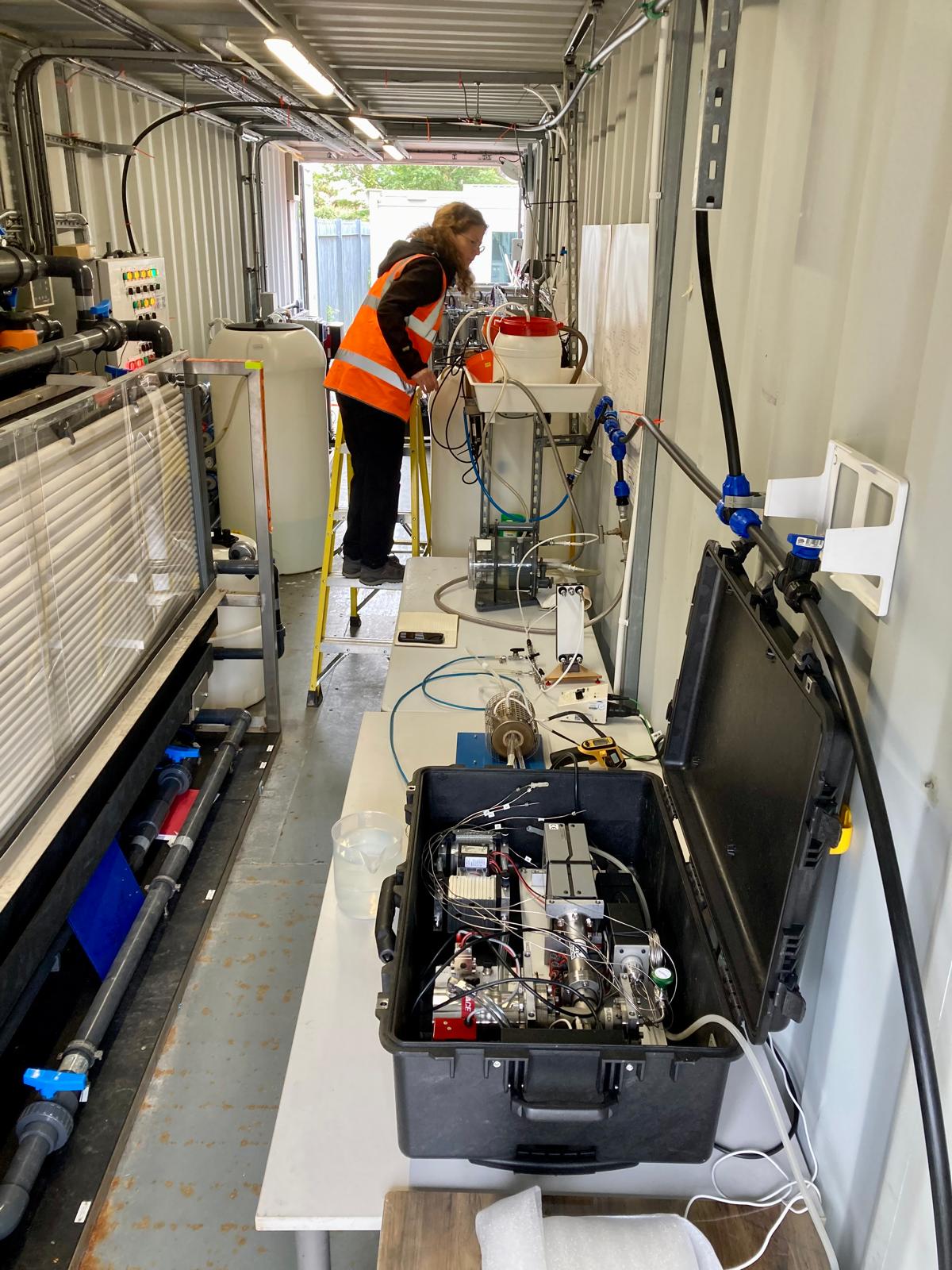
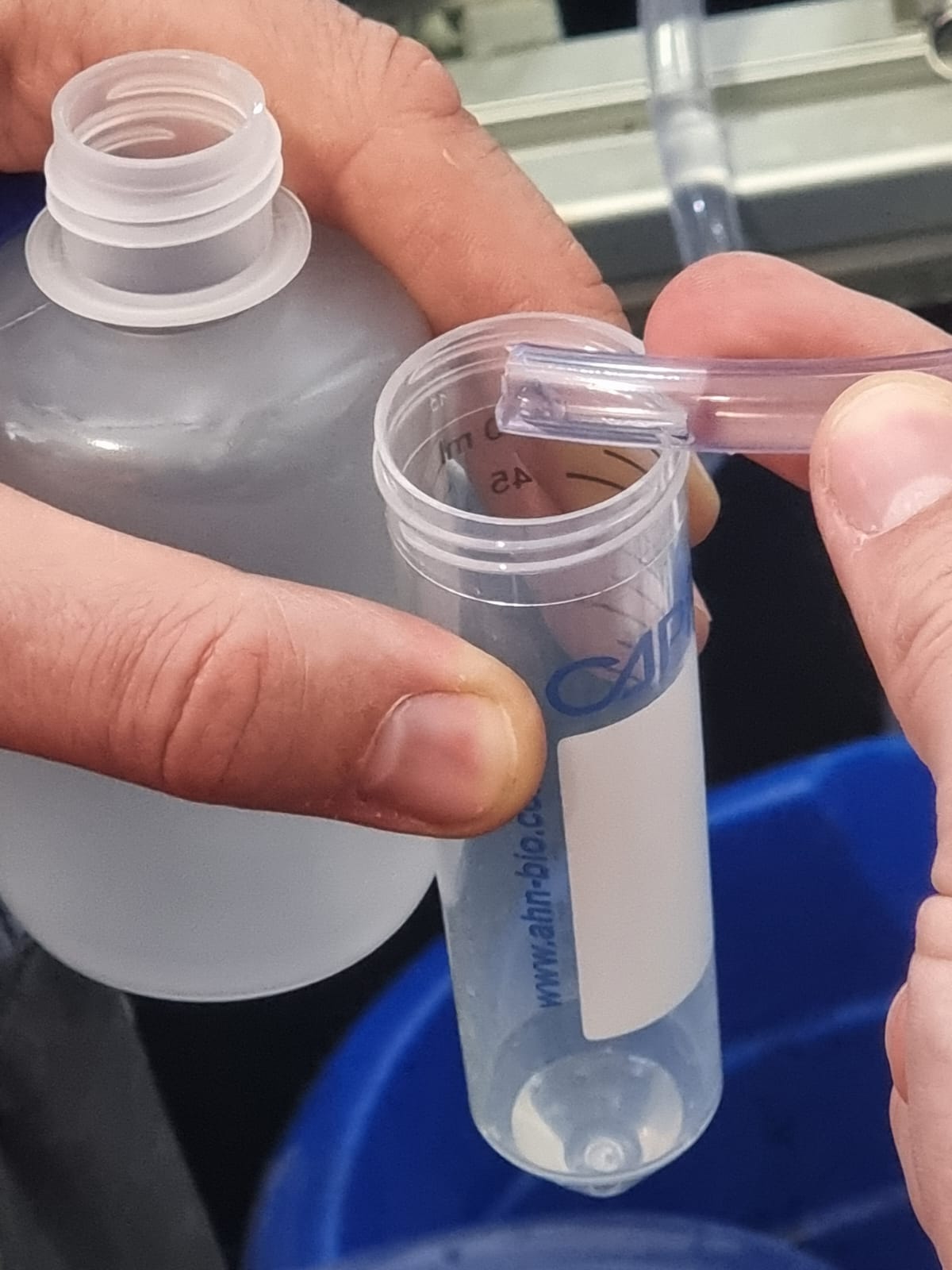
With a focus on helium, the GFZ gas geochemistry team (Bettina Strauch and Franziska Wilke, while Martin Zimmer unfortunately remained at GFZ) successfully installed the instrumentation needed to test and optimise the components of a helium recovery unit (HRU) on site. In the first step, the team separated the gas phase from the continuously flowing brine for analysis and further processing. In the second step, they tested and adjusted the helium enrichment process in the gas phase. In the second week, Andy Marriott, project partner from the British Geological Survey (BGS), also joined the team for a day and set up his instrument to compare different gas measurement methods.
The team was greatly supported on site by the Cornish Lithium team led by Mark Harris (WP lead in the project for WP5) and Dave Lowe (Technical Manager). Throughout the field campaign, they provided excellent technical support and great hospitality. All experiments were performed in a container equipped with all the necessary infrastructure, which also provided shelter from both rain and sun. When the rain stopped and temperatures began to rise, artificial cooling from above was introduced by placing sprinklers on top of our container. This helped to keep both the scientists and the equipment at a comfortable operating temperature.